

Global companies are eager to find their footing in Saudi logistics and transport. Transporting goods or passengers in the Kingdom needs explicit legal authorization. Those regulations are developed and enforced by the Saudi Transport General Authority, which is the principal government agency responsible for developing transportation policies.
The authority is referred to as the TGA. It is walking the walk of making, setting the bar for land, sea and rail transport. It governs the operation of commercial trucking, delivery vans and rental cars and passenger (and charter) bus fleets. Working without permits can bring huge fines, impounded vehicles and shut operations down.
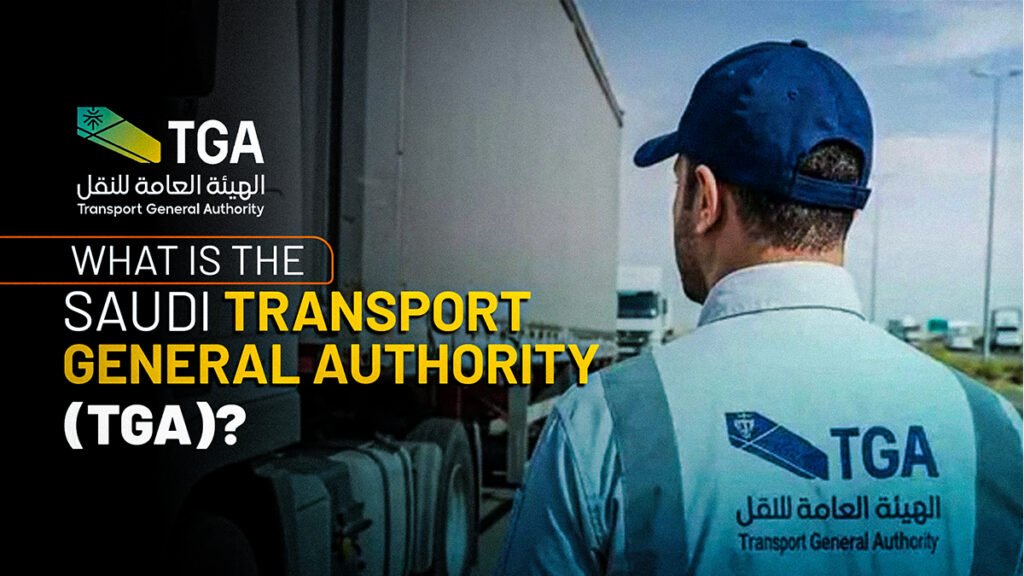
Knowing where to work with the TGA prepares you for your business. In these published “how to guides” find out, step by step how the regulator works, and how to use its digital systems and obtain your transport permits.
The Saudi Transport General Authority serves as the national regulator for both public and private transport. It works in the facilities of the Ministry of Transport and Logistic Services. The main job is keeping everyday transit safe, fast, and reliable right across the country.
The goal is to make the Kingdom the central stop for shipping lines crossing three continents. So as a way to reaching this intention, the TGA supervises three main delivery sectors:
The land transport sector is the largest area of responsibility for TGA. These rules apply to almost every commercial vehicle out there. That means big rigs, cargo vans, city buses, cabs, app-based drivers, and even breakdown haulers.
The authority grants operating permits to all commercial vehicles. It also lays down requirements for driver safety regulations, resting hours and vehicle maximum age limit.
The maritime framework is capable of limiting freight transportation for the Red Ocean and Arabian Gulf shorelines. The rules reach into sea freight, too. Cargo ships and workboats have to follow strict international safety and spill regulations set with the IMO.
It also licenses transport providers in the maritime area and is responsible for crew training programs.
Rail covers both passenger trips and heavy freight. That includes major setups like the Haramain bullet train and the long North-South line. That is, TGA established the safety codes for railways; both of train tracks and engine operation and station.
It also regulates train operators and rail infrastructure managers to ensure that they continue to operate safely throughout the national network.
Sector | Operations Covered | Key Safety & Regulatory Focus |
Land Transport | Taxis, drive-hailing services, and car rentalsFreight trucks | Age restricts for vehicles, driver working hours and integration with vehicle tracking |
Maritime Transport | Container and Commercial shipping, ferry vessels, workboats | Crew certifications, marine safety (IMO maritime standards) |
Rail Transport | Passenger Rail Lines, HS & Freight Cargo Rail Network | Lessons learnt Key elements of rail safety, Engine standards and operator licensing |
Most foreign companies first obtain an investment license from the Saudi Ministry of Investment (MISA). If you are a foreign investor, a MISA license enables you to own your company in Saudi Arabia. But this license by itself did not entitle you to do public road heavy transport operations.
Even a MISA license does not only establish your corporate entity. Sector-specific approval is needed from the transport regulator for piloting a real fleet.
There is a concise three-step process which you need to follow.
Your official tga license is a legal document that allows you to drive vehicles and transport goods. A lack of this approval allows traffic authorities to impose a fine on your business with the possibility to confiscate your trucks and freeze bank transactions.
Indeed, Saudi Arabia handles commercial transport through online systems. Such digital platforms enable less paperwork and that also safeguard the security. Any business which has a Saudi logistics license needs to process these 2 systems on a daily basis.
Naql portal is the central government website for transport licensing. It is used by transport operators to handle their official filings. Through this portal, you can:
Every commercial vehicle has to be loaded with a valid e-operating card, which has been issued through the NAQLl portal. These cards are read by digital scanners at highway checkpoints. Vehicle Stopped: If the vehicle card is invalid, expired or attached as a burning risk to the person then this vehicle is stopped.
The bayan platform is the national mandatory tracing tool for tracking commercial cargo. Leverage all the benefits of a digital freight registry. Transporters should raise a chargeable electronic waybill (E-Waybill) for each road trip.
Record crucial shipment info with the digital waybill:
Drivers can store this digital proof of license on mobile devices to be shown during police checkpoints. It certifies its use to circumvent illicit transportation and restrict the movement of goods inside the Kingdom only for companies licensed on this platform.
Platform Name | Primary Purpose | Required Action for Operators |
Naql Portal | Corporate licensing & fleet permits | Record fleet and allotment of Bataqat Naql, verification of drivers |
Bayan Platform | Cargo & shipment tracking | In any given road trip, generate digital waybills (E-Waybills). |
WASL Platform | Real-time GPS & telematics tracking | Connected cars are tied to the central government servers |
An orderly way to secure your transport approvals. It is very important to follow the right way in order not to face delays and your application not being processed.
Step Number | Stage Name | Mandatory Requirements |
Step 1 | Company Formation | MISA investment license, valid CR and Chamber of Commerce registration. |
Step 2 | Municipal Office Permit | Registered on Ejar & approved in Balady portal (Commercial office lease). |
Step 3 | Vehicle Technical Inspection | Fahas is a periodic vehicle inspection period that is valid and active commercial fleet insurance. |
Step 4 | Tracking Installation | GPS devices approved, installed and connected to the national WASL network. |
Step 5 | License Issuance | Final document submission on NAQL portal for issuing your tga license. |
If your company has to pursue national Saudization (Nitaqat) targets as well. Transport companies are required to employ Saudi citizens in designated managerial positions such as safety officers and fleet managers.
In this context, the authority regulates to maintain proper standards for every single registered vehicle in order to protect road users and cargo. Commercial vehicles like trucks and buses undergo periodic mechanical inspection before they can issue their operating cards.
The TGA puts upper age limits on vehicles to keep commercial fleets fresh:
Cars of more than 6 years are not allowed to re-apply for the operating card and have to be withdrawn from commercial use.
The national WASL tracking platform is a requirement for all commercial transport vehicles in Saudi Arabia. WASL — A fleet tracking system established by Elm under the auspices of TGA regulations.
Fleet operators should install approved GPS hardware through certified service providers. As you log into these devices, this would allow you to track vehicle speed with the live GPS location for real-time use along with total driving hours. Driver fatigue and speeding are monitored through the projects connected to this data that feeds directly into government monitoring systems.
Driving a transport business without due approvals carries heavy financial penalties. The TGA deploys field inspectors to patrol highways, shipping terminals and logistics parks on a daily basis.
Companies involved in import, export, wholesale, or retail operations require a trading licens
Violation Description | Regulatory Impact | Financial Penalty |
Operating Without a Vehicle Card | Roadside truck stoppage and delays | Up to SAR 5,000 per vehicle |
Missing Bayan Waybill | Immediate cargo inspection hold | SAR 4,000 per trip |
Unlinked WASL GPS Tracker | Registration renewal block | Up to SAR 5,000 per vehicle |
Expired Logistics License | Operational freeze across portals | Complete portal service freeze |
Saudization Non-Compliance | Labor quota penalties | Visa processing suspensions |
Why it is important to get on top of these rules early, and to not be the type of business that has a sudden stop in operations.
The development of Saudi Arabia at a high rate creates a stable need for professional logistic operators. Under the National Transport and Logistics Strategy, the Kingdom is investing more than 100 billion dollars into transport infrastructure.
Some of the areas which hold key growth potential for companies in the transport space include:
When companies set up their licensing rights they can actually compete for corporate and government supply contracts across the country.
To enter the transport company license in Saudi Arabia you only need to do the following steps:
By following these guidelines, your business is safe and compliant with the Saudi Transport General Authority at all times.
Your trusted partner for Saudi business setup, MISA licensing, software development, real estate investment, visa services, and international company formation. We help investors and businesses grow with end-to-end professional solutions.
