Expanding your business into Saudi Arabia comes with huge growth opportunities, but you have to play by the rules. The whole process runs through the ministry of investment, which hands out the official misa license. Think of this permit as your golden ticket—without it, international companies and foreign entrepreneurs simply can’t operate legally in the Kingdom.
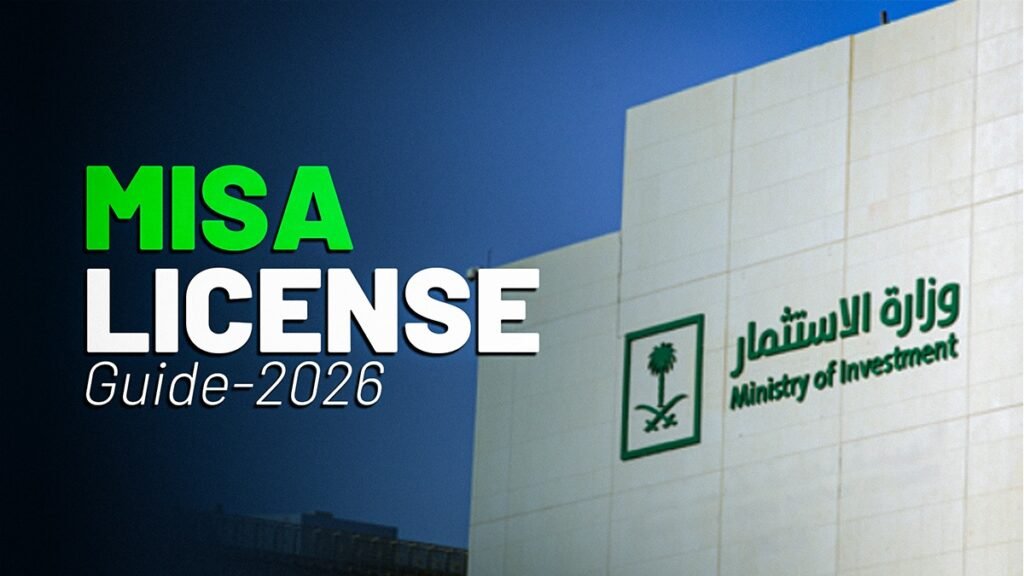
If you don’t have this approval, you can’t sign an office lease, hire staff, buy shares, or even set up a local bank account. Saudi Arabia has actually made things a lot easier lately by allowing 100% foreign ownership across most industries. That said, getting your misa license still means following strict rules around paperwork, capital minimums, and online filings.
Below, we’ll walk through the exact license requirements, your options for business setups, the real license cost, and what you need to do right after getting approved.
Issued under the Saudi Foreign Investment Law, this permit lets foreign companies set up shop without needing a local Saudi sponsor. You get the exact same legal rights and protections that local businesses enjoy under Saudi law.
Good to know: Saudi citizens and GCC nationals get their business permits directly through the Ministry of Commerce. The ministry of investment is strictly the entry point for all other global investors looking to get a trade license in Saudi Arabia.
The ministry of investment breaks licenses down by what your business actually does. Each group comes with its own paperwork standards and eligibility checks.
License Category | Target Operations | Capital & Eligibility Requirements |
Service License | IT, management consulting, marketing, engineering, or legal. | The parent entity needs to be at least 1 year old with audited books. Standard capital starts at SAR 25,000. |
Commercial License | Trading, retail, wholesale, e-commerce, and import/export. | Must show an existing presence in 3 overseas markets or commit to minimum capital requirements based on setup. |
Industrial License | Manufacturing, heavy production, assembly, and processing plants. | Requires extra sign-off from the Ministry of Industry and Mineral Resources. |
Entrepreneurial License | Innovation-focused scale-ups and tech startups. | You’ll need a formal endorsement letter from an approved Saudi university or incubator. |
Regional HQ (RHQ) | Executive management and regional strategy for MENA operations. | Must open an executive office. Keep in mind: you cannot do direct commercial trading under an RHQ permit. |
Quick advice: Be super careful when picking your activity codes upfront. If you want to add completely different services later, you’ll have to go through a slow amendment process.
Getting your paperwork right is where most applicants hit a wall. If your documents are incomplete or missing signatures, officials will turn them away at the door.
Before you submit anything in Saudi Arabia, your papers need to go through four clear checks:
Make sure every non-Arabic document gets translated into Arabic by an authorized translator inside the Kingdom before you submit.
The whole process runs online through MISA’s e-Services portal:
Once approved, this permit lets you move straight into getting your official commercial license and local registration.
Going into the Saudi market means budgeting for official permit fees plus post-licensing setup costs.
Fee Type | Who Collects It | Estimated Cost (SAR) |
MISA Investment Permit | Ministry of Investment | SAR 2,000 – SAR 12,000 (First Year) |
Commercial Registration (CR) | Ministry of Commerce | SAR 1,200 – SAR 2,500 |
Chamber of Commerce | Regional Chamber (Riyadh/Jeddah) | SAR 2,000 – SAR 10,000 |
Legal Attestations & Translations | MOFA / Translation Services | SAR 3,000 – SAR 12,000 |
MISA Renewal | Ministry of Investment | Standard annual renewal fees apply |
Your actual license cost depends heavily on your ownership percentage, your business activities, and how your company is structured. Don’t forget to factor in third-party legal or consulting fees when putting together your budget.
Getting your investment approval is a huge win, but you aren’t quite ready to trade yet. Your General Manager needs to finish these four steps locally:
To keep your misa license active without running into penalties, stay on top of these routine obligations:
Your trusted partner for Saudi business setup, MISA licensing, software development, real estate investment, visa services, and international company formation. We help investors and businesses grow with end-to-end professional solutions.
